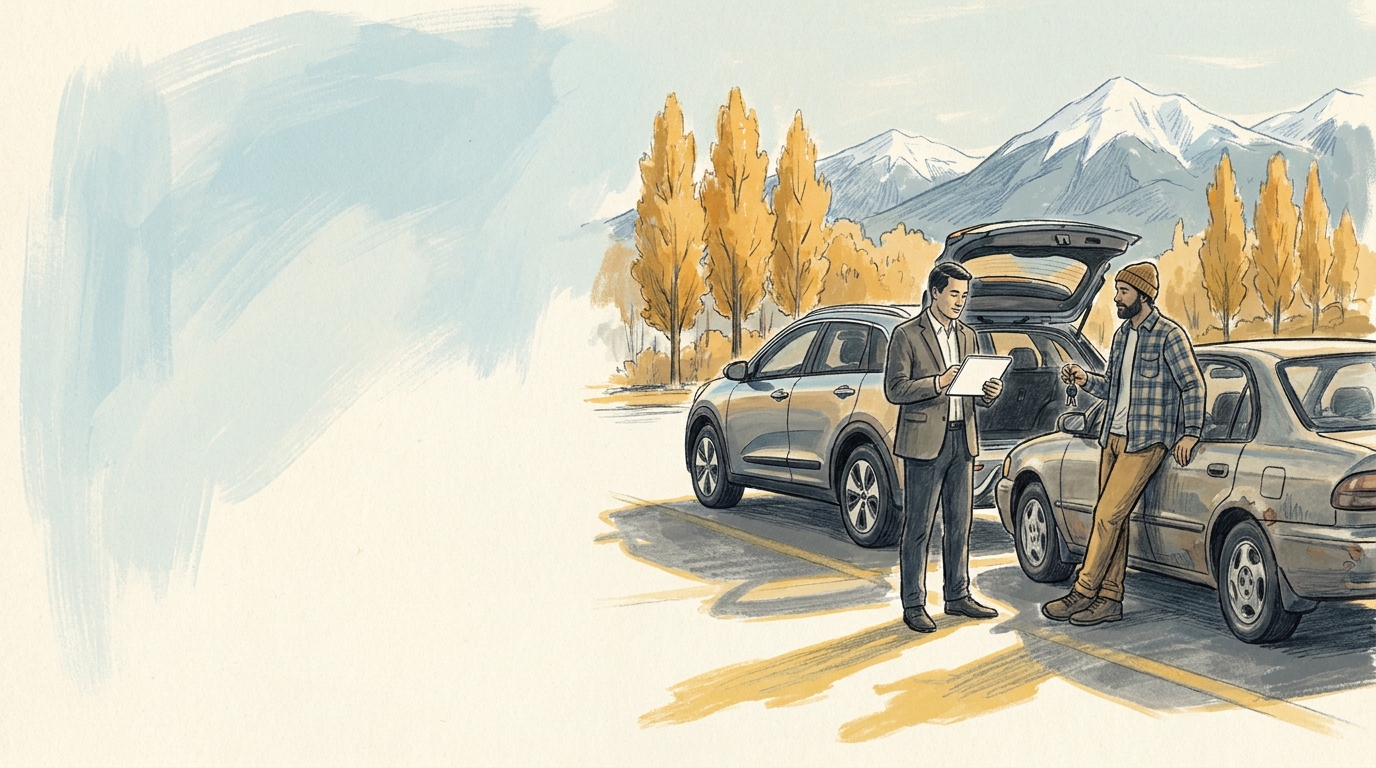
Dealership vs Private Seller in West Valley City, UT: 2026
The honest tradeoffs between buying from a West Valley City dealership and a private seller — titling, emissions, financing, and what actually protects you.
Buying from a West Valley City dealership is generally the lower-risk path for most used-car shoppers, but it is not automatically cheaper, safer, or warrantied. A dealer handles title transfer, emissions compliance, and federally required disclosures; a private seller usually offers a lower sticker but shifts every one of those tasks — and every risk — onto you. The right choice depends on how much of that work you want to own.
The common belief is that private sellers always save you money and dealers always protect you. Both halves of that are wrong. A private sale can hide real costs in paperwork, repairs, and tax penalties; a dealership sale can still leave you with an "as is" car if you don't read the required disclosure form. The myth-busting answer below walks through what actually changes between the two in Utah.
Is a dealership really safer than a private seller in West Valley City?
Safer on paperwork and disclosures, yes — safer on the vehicle itself, only if you verify it. Federal law requires a licensed dealer to display an FTC Buyers Guide stating whether the car is sold "as is" or with a warranty, and that requirement does not apply to ordinary private-party sales. That disclosure is the single clearest legal difference between the two transactions.
The required disclosure form tells you what you're actually getting. Utah regulators have also warned that verbal promises from a dealer can override a written "as is" disclaimer, which means what a salesperson tells you on the lot has legal weight — but only if you can prove it was said. A private seller owes you none of that structure. Whatever they say about the car's condition is, in practice, your word against theirs after the keys change hands.
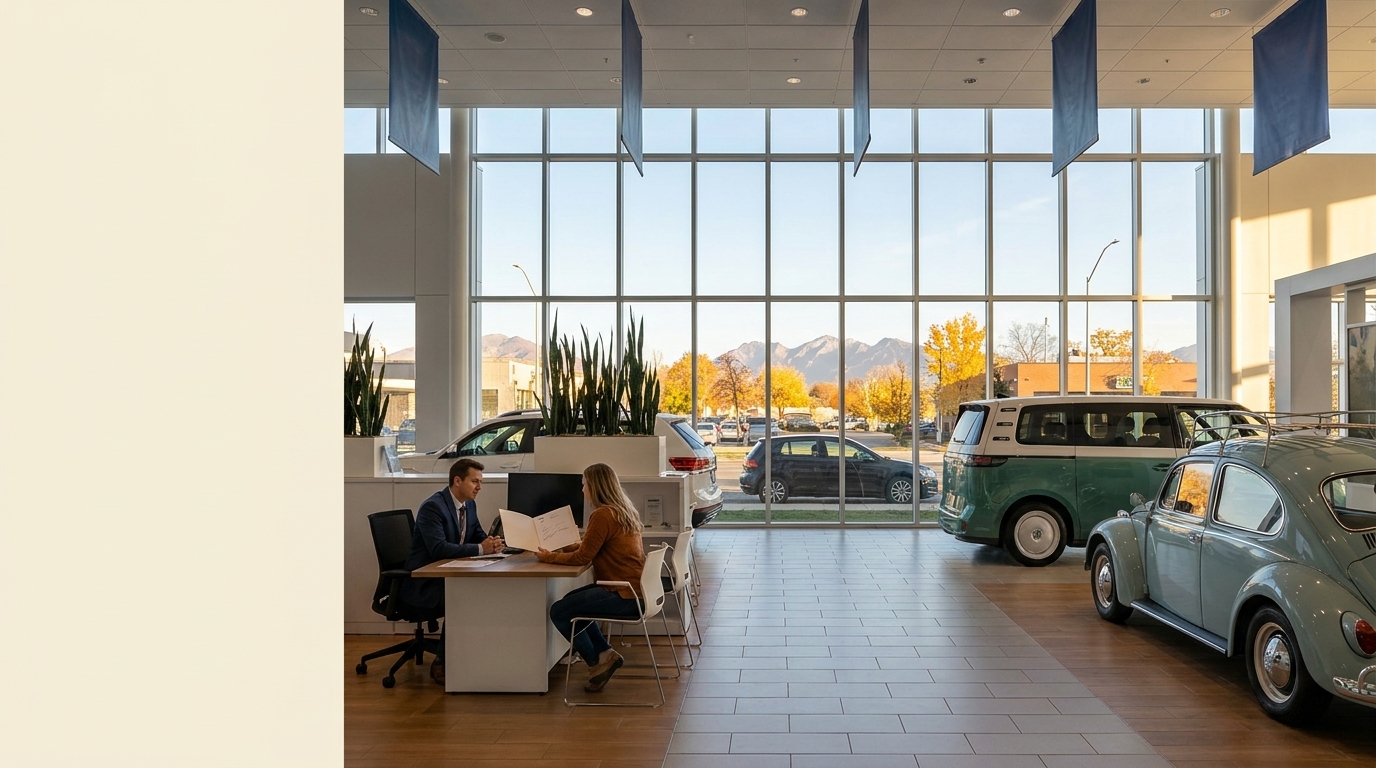
Strong Volkswagen, located at 1070 South Main Street in Salt Lake City just east of West Valley City, is one example of the licensed-dealer side of this comparison. Being a franchised dealer means the required disclosure form, title workflow, and emissions requirements are built into how every sale closes.
Who handles the title, emissions, and registration?
At a Utah dealership, the dealer handles title transfer and ensures the vehicle meets emissions requirements before issuing a temporary permit. In a private sale, every one of those steps falls on you — the buyer walks away from the seller's driveway with a signed title and a to-do list for the DMV, the emissions station, and the county.
Utah requires licensed dealers to ensure vehicles sold to residents of Salt Lake County and certain other counties meet applicable emissions requirements before a temporary permit is issued. For context, vehicles registered in Salt Lake County that are less than six model years old need an emissions test every two years. In a private sale, the Utah DMV says buyers should bring the original title, a duplicate-title application, or a bill of sale to begin title transfer — additional documents may be needed depending on the situation.
None of this is impossible to handle yourself. It is simply work the dealer does for you automatically, and work most private sellers assume you will do on your own.
Does a private sale actually save you money?
Sometimes — but less often than people think, once tax rules and inspection costs are counted. Utah's DMV states that sales and use tax on a vehicle is based on the actual purchase price, and the documents must state what the buyer actually paid. Underreporting to lower the tax bill can trigger additional tax, penalties, and interest, including a fraud penalty of 100% of the tax or $500, whichever is greater, according to dmv.utah.gov.
That rule applies to every sale in Utah, dealer or private. The "friendly" bill of sale written for a lower number is not a loophole; it is a documented risk. On top of that, a private-sale buyer typically pays out of pocket for an independent pre-purchase inspection — a step dealerships handle internally. Most dealerships inspect used vehicles before putting them up for sale, and dealership technicians look for mechanical issues, worn components, and safety concerns that many buyers wouldn't notice during a fifteen-minute test drive.
How does financing differ between the two?
Private sales usually require buyers to arrange financing themselves or pay cash, while a dealership can work with multiple lenders and help buyers compare financing options in one place. Arranging financing for a private sale can mean making extra trips to the bank, waiting on paperwork, or coordinating around the seller's schedule — timing a lot of private sellers won't wait for.
Dealer financing is not automatically the cheapest path, though. For most buyers, financing through a bank or credit union before visiting the dealership produces a lower total loan cost than accepting the rate the dealer offers at the lot, because dealers earn a fee by marking up the interest rate above what the bank actually charges. Dealers earn a fee by marking up the interest rate above what the bank actually charges, increasing the buyer's total loan cost.
The practical move for a West Valley City buyer: get pre-approved at a credit union before you shop, then let the dealership try to beat that rate. You keep the convenience of one-stop financing and the pricing discipline of an outside quote.
Dealership vs private seller: side-by-side
| Factor | Licensed Utah dealership | Private seller |
|---|---|---|
| FTC Buyers Guide | Required by federal law | Not required |
| Title transfer | Dealer handles paperwork | Buyer handles at DMV |
| Emissions compliance | Dealer verifies before temp permit (Salt Lake County) | Buyer verifies and pays |
| Pre-sale inspection | Typically performed by dealer technicians | Buyer arranges independently |
| Financing | Multiple lenders available on-site | Buyer arranges own loan or pays cash |
| Written warranty | Possible — disclosed on Buyers Guide | Virtually never |
| Sales tax reporting | Based on actual purchase price | Based on actual purchase price |
What does the process look like at a West Valley City dealership?
At a franchised dealer like Strong Volkswagen, the paperwork, financing, and vehicle verification are bundled into one visit. Strong Volkswagen describes itself as a family-run business and states it is the longest-running Volkswagen dealership in Utah, with new models including the 2026 Volkswagen Jetta, starting at $23,995 (as of October 2026), the 2026 Volkswagen Taos, starting at $26,500 (as of October 2026), and the 2026 Volkswagen Tiguan, starting at $30,805 (as of October 2026) on the new side, and inspected used inventory on the pre-owned side.
From Strong Volkswagen: At Strong Volkswagen we offer our 60 Minute Promise. You can buy a car in under an hour - guaranteed - or we'll refund your first payment. Many customers love our 60 Minute Promise program because they are short on time or prefer doing the legwork in the comfort of their own home using our online tools. Other customers like to take their time at our dealership. We accommodate either style! The finance step can take longer if customers haven't completed the credit application prior to visiting us.
A recent customer review illustrates how that process plays out in practice — including the honest note that no dealership transaction is perfect:
Walked in and talked with Christian but since he was expecting a client he introduced me to Zac. Zac was great! Can’t say enough great things about that!I will say the one negative was the car I ultimately bought didn’t even have 4,000 miles and the vent control broken during the test drive and they refused to fix it. The car is great other than the vent blasting my contacts until I get it fixed…I would recommend Zac and/or Christian to anyone looking for a VW! They got you
The lesson from that review applies to both dealer and private purchases: inspect before you sign, and get any promised repair in writing.
Frequently asked questions
Is buying from a dealership better than a private seller for a first-time buyer?
For most first-time buyers in West Valley City, yes. A licensed dealership handles title transfer, emissions compliance, and the required federal disclosure automatically, and it offers on-site financing options. A private sale puts all of that on the buyer, which is manageable with experience but a steep learning curve on a first purchase.
Can I get a warranty from a private seller?
Almost never. Private sellers typically sell vehicles "as is," with no written warranty and no legal requirement to provide one. Any manufacturer warranty still in force transfers with the vehicle, but once that expires, repairs are your responsibility. A dealership sale may include a written warranty, but only if the required disclosure form says so — read it carefully before signing.
How does Utah sales tax work on a private used-car sale?
Utah's DMV states that sales and use tax is based on the actual purchase price of the vehicle, and the paperwork must reflect what the buyer actually paid. This applies to private and dealer sales alike. Underreporting the price to reduce tax can trigger additional tax, penalties, and interest, including a fraud penalty of 100% of the tax or $500, whichever is greater.
Who handles emissions testing in a private sale in Salt Lake County?
The buyer does. Utah requires licensed dealers to ensure vehicles sold to Salt Lake County residents meet emissions requirements before a temporary permit is issued, but that obligation does not transfer to a private seller. Vehicles registered in Salt Lake County that are less than six model years old need an emissions test every two years, and the private-sale buyer arranges and pays for it.
Should I get pre-approved for financing before visiting a dealership?
Usually yes. According to myfsbonline.com, financing through a bank or credit union before visiting the dealership produces a lower total loan cost than accepting the rate the dealer offers at the lot, because dealers earn a fee by marking up the interest rate above what the bank actually charges. A pre-approval gives you a benchmark the dealership has to beat.
What documents do I need to transfer a title in Utah?
The Utah DMV says buyers should have the original title, a duplicate-title application, or a bill of sale to begin the title transfer process, and that additional documents may be needed depending on the vehicle and the circumstances. A dealership prepares and submits this paperwork for you as part of the sale; a private-sale buyer handles it at the DMV.
Is an independent inspection worth it on a dealership used car?
Often, yes — especially for an "as is" vehicle. Most dealerships inspect used vehicles before putting them up for sale, and dealership technicians look for mechanical issues, worn components, and safety concerns that many buyers wouldn't notice during a fifteen-minute test drive. An independent inspection adds a second set of eyes and is standard practice for a private-party purchase.
The honest takeaway
A dealership sale is better for most West Valley City buyers because it bundles the title work, emissions compliance, required federal disclosure, and financing into one transaction with legal structure behind it. A private sale can be cheaper and sometimes is — but only when the buyer is prepared to handle the DMV, the emissions station, an independent inspection, and their own financing without help. The savings disappear fast if any of those steps go wrong.
Readers in West Valley City who want this handled by a franchised Volkswagen dealership can reach Strong Volkswagen at (801) 285-9033 or https://www.strongvw.com to get started.