New vs Used Car in Salt Lake City: 2026 Framework
Compare new vs used cars at a Salt Lake City dealer with real 2026 price gaps, depreciation data, financing rates, and a clear decision framework.
For most Salt Lake City buyers in 2026, a new car makes sense when you plan to keep it 6+ years, want the full factory warranty, and can absorb roughly 20% first-year depreciation; a used car (2-4 years old) wins on total cost of ownership, typically saving $6,000-$12,000 versus new on a comparable trim. The right answer depends on your monthly budget, annual mileage, and how long you'll hold the vehicle.
What's the real price gap between new and used in Salt Lake City in 2026?
In the Salt Lake City market, a new compact SUV commonly transacts in the $28,000-$36,000 range, while a 2-3 year-old equivalent typically lists $6,000-$12,000 lower. Certified pre-owned (CPO) sits in the middle, adding roughly $1,500-$2,500 over a comparable non-certified used vehicle in exchange for an extended limited warranty.
- New compact SUV: $28K-$36K typical transaction
- 2-3 yr used, same segment: $20K-$28K
- CPO premium: +$1,500-$2,500 vs. non-certified used
- New midsize sedan: $26K-$32K
- 3-yr used midsize sedan: $17K-$23K
The gap widens on luxury and shrinks on high-demand economy models where used supply is tight. Salt Lake City's used inventory in 2026 is healthier than the 2026-2026 shortage years, but clean, low-mileage trucks and hybrids still command a premium along the Wasatch Front.
How does depreciation change the math for Utah buyers?
New vehicles lose roughly 20% of value in year one and about 40-50% by year five, per widely cited Kelley Blue Book depreciation data. A used car bought at 2-3 years old skips the steepest curve — the original owner absorbed the biggest hit. That's the single largest financial argument for used.
| Ownership Year | Approx. Value Retained (New) | Approx. Value Retained (3-yr Used at Purchase) |
|---|---|---|
| Year 1 | ~80% | ~90% of purchase price |
| Year 3 | ~60% | ~75% |
| Year 5 | ~50-55% | ~65% |
| Year 7 | ~40% | ~55% |
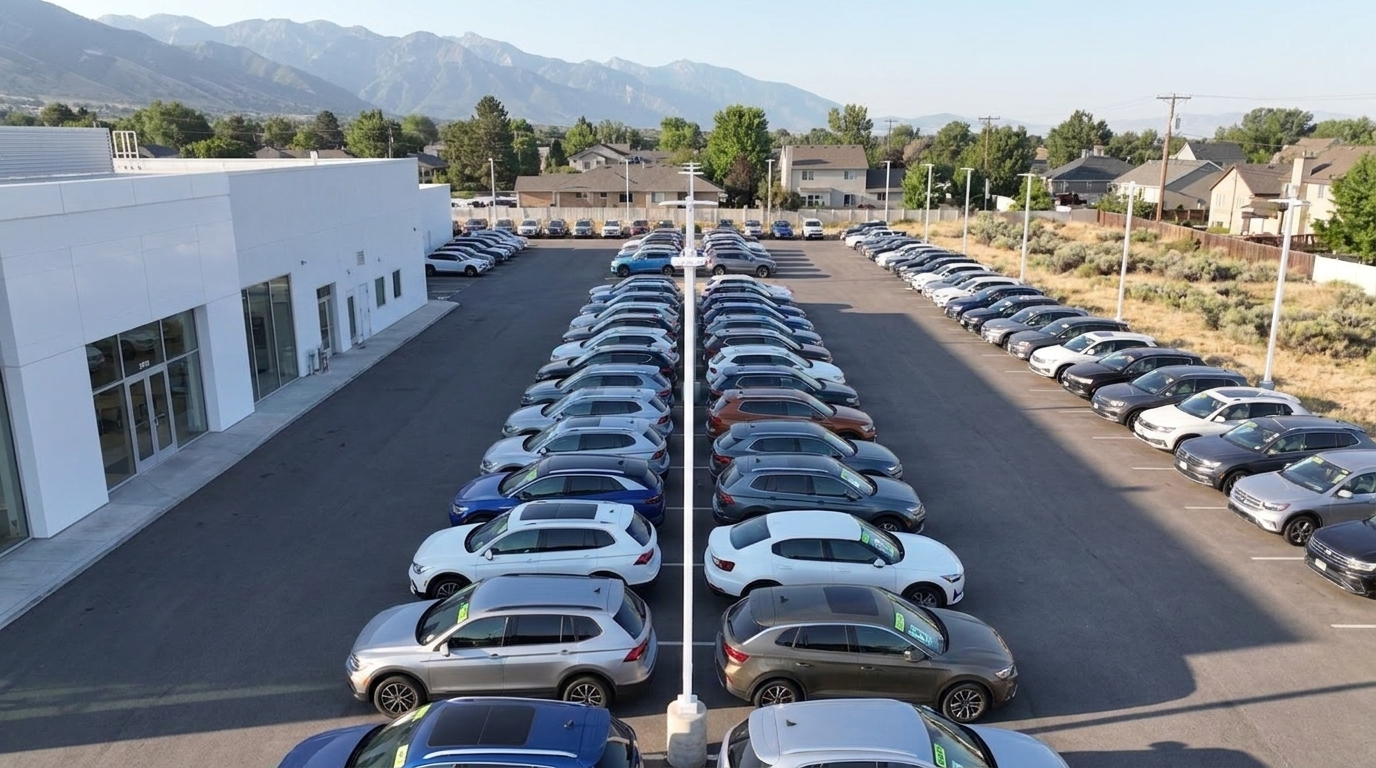
If you resell or trade in every 3-4 years, used almost always wins on total cost. If you keep vehicles 8-10 years, the depreciation gap narrows and new becomes competitive — especially factoring in warranty coverage and financing rates. Strong Volkswagen's used and CPO inventory along State Street gives Salt Lake City shoppers a direct way to compare both sides of this curve on the same lot.
How do 2026 financing rates and Utah taxes affect the decision?
New-car APRs in 2026 typically run 2-4 percentage points lower than used-car rates for buyers with strong credit, and manufacturers occasionally offer promotional 0.9%-3.9% financing on select new models. Used-car APRs commonly sit in the 7%-10% range. Utah charges state sales tax on the difference between the new vehicle price and your trade-in value — a real benefit for trade-in buyers regardless of new or used.
- New APR (well-qualified): ~5%-7%, plus occasional manufacturer subvented rates
- Used APR (well-qualified): ~7%-10%
- Utah combined sales tax (Salt Lake County): approximately 7.25%-7.75% depending on exact address
- Trade-in tax credit: Utah taxes only the difference — a $10,000 trade on a $30,000 vehicle means tax on $20,000
Run the total: monthly payment × months + down payment + tax + fees. A used car with a higher APR can still beat a new car with a promo rate if the price gap is wide enough. Ask the dealer for both quotes on paper.
When does new make more sense than used in Salt Lake City?
New wins when you want the latest safety and driver-assist tech, plan to keep the car 6+ years, drive high annual mileage where warranty coverage matters, or qualify for manufacturer subvented financing that offsets depreciation. New is also the safer bet for buyers who don't want to evaluate a used vehicle's service history.
- You want the full factory bumper-to-bumper and powertrain warranty (VW's is 4 yr / 50,000 mi bumper-to-bumper)
- You drive 15,000+ miles a year and want warranty coverage through the highest-risk period
- You want current-generation ADAS (adaptive cruise, lane keep, blind-spot)
- Utah winters and I-15 commuting favor newer tires, brakes, and drivetrain reliability
- Promotional APR closes the price gap
When does used make more sense?
Used wins when you want the lowest total cost of ownership, plan to hold the car 3-5 years and resell, need a lower monthly payment for the same segment, or want a class of vehicle (larger SUV, luxury trim) that would be out of budget new. CPO gives you most of the used savings with warranty protection layered back in.
- You want to avoid the first-year depreciation cliff
- You value monthly cash flow over long-term ownership
- You want a segment upgrade (larger SUV, higher trim) at the same budget
- You have mechanical knowledge or trust the dealer's inspection
- CPO gives you a manufacturer-backed extended warranty on top
One Salt Lake City reviewer described a recent used purchase as "the most straightforward pricing & fair trade in value up front" — the kind of experience that separates a strong used-car transaction from a stressful one. Strong Volkswagen carries 4.4 stars across more than 7,600 Google reviews, with recurring feedback around transparent pricing on both sides of the new/used aisle.
What should Salt Lake City buyers check before signing either way?
Before signing on new or used, verify the out-the-door price (vehicle + Utah sales tax + title + registration + doc fee), confirm the APR and term in writing, get the trade-in offer separately, and — for used — pull the Carfax and review the pre-delivery inspection. Reject any dealer who won't itemize these on paper.
- Out-the-door price, itemized
- APR, term, and total finance cost
- Trade-in value quoted independently of the sale price
- Warranty terms (new factory, CPO extended, or used as-is)
- Carfax and service history (used only)
- Utah title and registration timing (dealers handle at time of sale)
Frequently Asked Questions
Is it cheaper to buy new or used at a Salt Lake City dealer in 2026?
Used is almost always cheaper upfront — typically $6,000-$12,000 less than a comparable new vehicle in the same segment. However, new cars carry lower APRs (often 5%-7% vs. 7%-10% used) and full factory warranty coverage. Over 8-10 years of ownership, the total-cost gap narrows. For 3-5 year ownership, used wins clearly on total cost.
How much does a car depreciate in the first year?
A new car typically loses about 20% of its value in year one and 40-50% by year five, according to Kelley Blue Book depreciation data. This is the single strongest financial argument for buying a 2-3 year-old used vehicle — the original owner has already absorbed the steepest part of the curve, leaving a more gradual depreciation slope for the second owner.
Does Utah tax trade-ins when buying a car?
Utah taxes only the difference between the new vehicle price and your trade-in value, not the full purchase price. If you trade a vehicle worth $10,000 toward a $30,000 car, you pay Utah sales tax on $20,000. Salt Lake County's combined sales tax rate typically runs about 7.25%-7.75% depending on the exact delivery address.
Is certified pre-owned worth the extra cost?
CPO usually adds $1,500-$2,500 over a comparable non-certified used vehicle and includes a manufacturer-backed inspection plus extended limited warranty. For buyers who want used-car pricing with new-car peace of mind, CPO is generally worth it — especially on vehicles you plan to keep past the original factory warranty period.
What credit score do I need for the best auto loan rate in Utah?
Lenders typically reserve their lowest advertised APRs for buyers with FICO scores of 720 or above, with the sharpest promotional new-car rates often requiring 740+. Scores in the 660-719 range still qualify for competitive financing, while sub-660 buyers should expect meaningfully higher APRs on both new and used. Ask the dealer's finance team to shop multiple lenders.
Should I buy new or used for Utah winter driving?
Both work well for Wasatch Front winters if properly equipped — the deciding factor is tire condition and drivetrain health, not model year. A new vehicle gives you fresh all-season or winter tires and full brake life. A well-inspected used vehicle with recent tires and service records performs identically. Prioritize AWD or FWD with dedicated winter tires either way.
Bottom line
The new-versus-used decision in Salt Lake City comes down to three numbers: how long you'll own the car, your annual mileage, and the actual APR gap between new and used offers on your specific credit tier. Ask for both quotes on the same vehicle segment, itemized to the out-the-door price. Salt Lake City shoppers who want to compare new Volkswagen models against CPO and used inventory on one lot can reach Strong Volkswagen at https://www.strongvw.com to price both sides of the decision.