Trade-In With Negative Equity at a VW Dealer in Provo, UT
Upside-down on your car loan in Provo? Here's what waiting costs, how Utah handles rolled-over negative equity, and how to trade in smart in 2026.
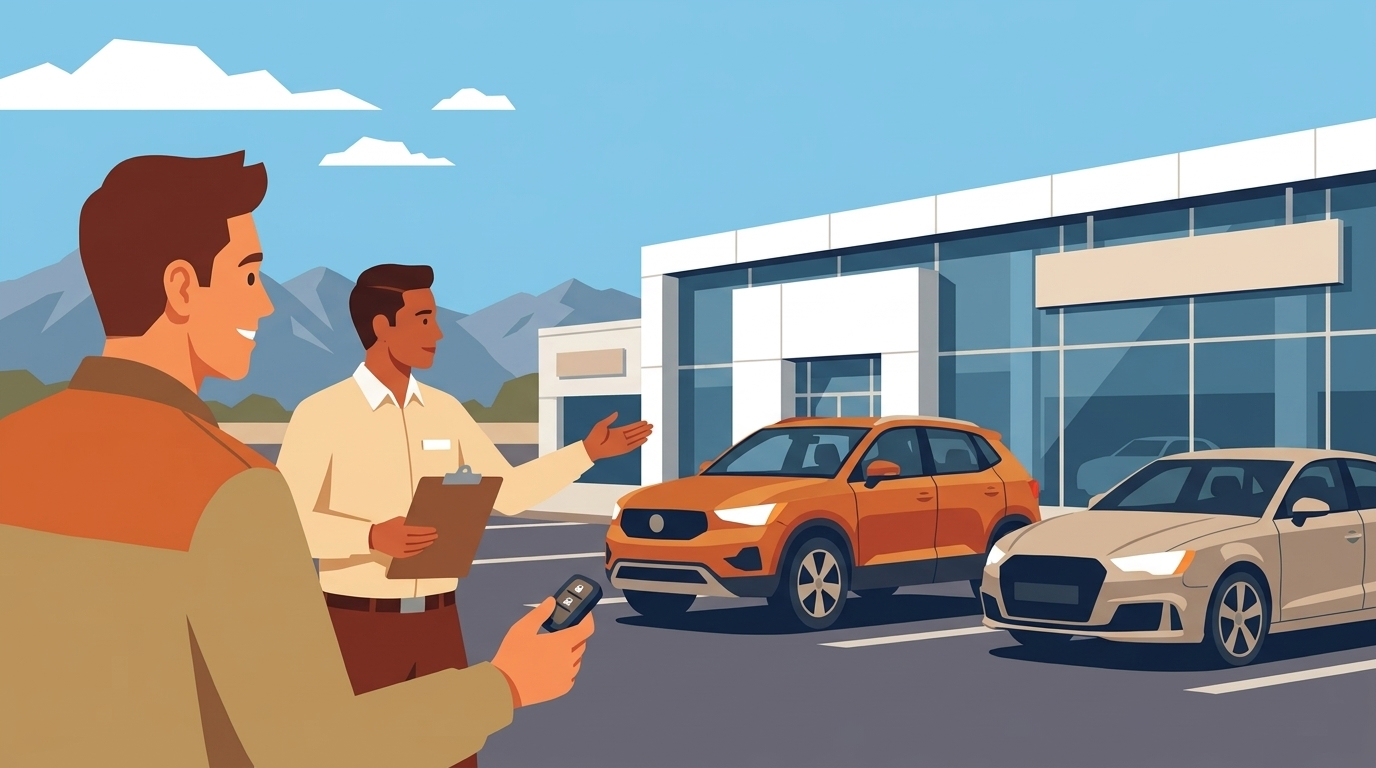
If you owe more on your current vehicle than it's worth and you want to trade it in at a Provo Volkswagen dealer, you generally have three options: pay the difference in cash at signing, roll the negative equity into your new Volkswagen loan (which increases your total amount financed under federal Truth in Lending rules), or keep driving your current vehicle until the gap closes. Waiting is rarely free — depreciation typically outpaces principal paydown in the first two to three years of a loan, so the gap usually widens before it shrinks.
What does negative equity actually cost you each month you wait?
Negative equity compounds silently. Every month, your payoff drops by a small principal amount while your vehicle's market value drops by depreciation — and in years one through three of most auto loans, depreciation wins. A $3,000 gap today can become a $4,000 gap by next summer if the vehicle depreciates faster than you pay down principal, and you'll finance that larger gap on your next car.
How does rolling negative equity into a new Volkswagen loan work in Utah?
In Utah, rolled-over negative equity is added to the amount financed on your new retail installment contract. Utah Code and federal Regulation Z require the buyer's order to accurately show the vehicle cash price, trade-in allowance, trade-in payoff, and total amount financed. Unlike Texas, Utah has no statute requiring a separately labeled "NEGATIVE EQUITY AMOUNT" line — but the number is still there, inside your total financed.
At Strong Volkswagen in Provo, that means the numbers you sign should let you back into the math yourself: cash price of the new Jetta, Tiguan, Atlas, or ID.4, minus your trade allowance, plus your old payoff, plus tax, title, and fees. If any of those four figures is missing or unclear, ask for a revised buyer's order before you sign.
How does Utah sales tax treat a trade-in with negative equity?
Under Utah Code §59-12-102, sales tax on a vehicle is calculated on the purchase price minus the trade-in allowance. Rolling negative equity into the new loan increases the amount you finance but does not increase the taxable purchase price of the new vehicle. In other words, you get the trade-in tax credit on the allowance itself; the old payoff is a financing issue, not a tax issue.
What does waiting six or twelve more months typically cost?
Waiting has three cost components most Provo buyers underestimate:
- Continued depreciation. New vehicles commonly lose the largest share of value in the first 36 months. If your vehicle is inside that window, waiting usually deepens the hole.
- Interest on a shrinking asset. Early-loan payments are interest-heavy, so principal paydown is slow exactly when depreciation is fastest.
- Repair and maintenance risk. Wasatch Front winters — road salt, freeze-thaw cycles, and the long climb up to snow country — accelerate wear on brakes, tires, and suspension. A surprise repair on a vehicle you're already upside-down on effectively adds to your negative equity.
The honest exception: if you're within a few months of crossing into positive equity (a large tax refund, a bonus, or a loan that's finally past its interest-heavy years), waiting can be the right call. Run the numbers before you assume.
When is rolling negative equity a reasonable move — and when isn't it?
Rolling negative equity can make sense when the new vehicle is meaningfully cheaper to own (better fuel economy, out of warranty into warranty, or replacing an unreliable vehicle), when incentives or a manufacturer rate offsets the added principal, or when your current vehicle is deteriorating faster than the market. It's a poor move when you're rolling a large gap into a longer loan on a similarly priced vehicle — that stacks negative equity onto negative equity and starts the next loan already underwater.
A useful rule of thumb: if the rolled-over gap pushes your loan-to-value ratio above roughly 125% on the new vehicle, most lenders will either decline, require a larger down payment, or price the loan at a higher rate. That's a signal to reconsider, not to shop harder.
How do the three main paths compare?
| Approach | Best when | Main risk |
|---|---|---|
| Pay the gap in cash at signing | You have savings and want the cleanest new loan | Depletes cash reserves |
| Roll negative equity into the new VW loan | The new vehicle lowers total cost of ownership or resolves a reliability issue | Starts new loan underwater; higher payment or longer term |
| Keep driving and wait | You're close to positive equity and the vehicle is reliable | Depreciation and repairs can widen the gap |
| Refinance current loan, then trade later | Your rate is high and payoff is shrinking slowly | Doesn't fix depreciation, only interest |
What should Provo buyers bring to the appointment?
Bring a 10-day payoff quote from your current lender (not the balance on your app — those differ), your current registration, your driver's license, proof of insurance, and any recent service records. If your title is branded or salvage, Utah Code §41-1a-1004 requires written disclosure using state Form TC-814 before the sale is finalized, signed by the buyer and any lienholder. Every ownership transfer also requires an odometer disclosure under §41-1a-902 using Form TC-891.
Strong Volkswagen is located on the Provo auto corridor near I-15, convenient to buyers coming from Orem, Springville, Spanish Fork, and the BYU campus area. A same-day appraisal and test drive are typically feasible when you bring the documents above.
How do you know a Provo dealer is handling the numbers fairly?
Utah Administrative Code Rule R877-23V-7 prohibits dealers from advertising specific minimum trade-in amounts, "greatest allowance" claims, or unconditional promises to pay off any trade regardless of balance. Violations carry escalating penalties of $250, $1,000, and $5,000 for first, second, and third offenses within twelve months, enforced by the Utah Motor Vehicle Enforcement Division under Utah Code §41-3-210.
Practically, that means any dealer promising to "pay off your trade no matter what" is either misquoting the rules or planning to bury the shortfall in your new loan. That is the standard to hold any Provo dealer to.
Frequently Asked Questions
Can I trade in a car in Provo if I still owe money on it?
Yes. The dealer requests a 10-day payoff from your lender and pays off the loan directly as part of the transaction. If your trade allowance exceeds the payoff, the difference becomes a down payment on the new Volkswagen. If the payoff exceeds the allowance, the shortfall is either paid in cash at signing or rolled into your new loan.
Does Utah require a special negative equity disclosure on the buyer's order?
No. Unlike Texas Transportation Code §501.0275, Utah has no statute requiring a separately labeled "NEGATIVE EQUITY AMOUNT" line. However, the buyer's order must accurately show the vehicle cash price, trade-in allowance, trade-in payoff, and total amount financed, and federal Regulation Z requires the amount financed to reflect any rolled-over negative equity.
Do I still get the Utah sales tax break on my trade if I'm upside-down?
Yes. Under Utah Code §59-12-102, sales tax is calculated on the purchase price of the new vehicle minus the trade-in allowance. That trade-in tax credit applies regardless of what you still owe. The negative equity affects your financing total, not the taxable price of the new Volkswagen.
Can I qualify for Volkswagen financing in Provo with bad credit and negative equity?
Often yes, but terms tighten. Lenders look at loan-to-value ratio, income, and credit tier together. Rolled-over negative equity pushes LTV higher, which can trigger a larger down payment requirement, a shorter loan on a less expensive model, or a higher rate. Strong Volkswagen's finance team works with multiple lenders and can typically tell you within the same visit which structures are realistic.
Should I refinance my current loan instead of trading it in?
Refinancing helps if your current rate is high and the vehicle still suits you. It lowers interest cost and speeds principal paydown, which shrinks negative equity over time. It does not fix depreciation or reliability issues. If you're trading primarily because the vehicle no longer fits your life, refinancing only delays the same decision.
What paperwork do I need to bring to a same-day Volkswagen test drive and appraisal in Provo?
Bring a valid driver's license, proof of current insurance, your vehicle registration, and a 10-day payoff quote from your lender. If your trade has a branded or salvage title, Utah Code §41-1a-1004 requires written disclosure on Form TC-814 before sale, and every transfer requires an odometer disclosure on Form TC-891 under §41-1a-902. Service records help support a stronger trade appraisal.
The bottom line for Provo buyers
Negative equity is a math problem, not a moral one — but it's a math problem that usually gets worse the longer you leave it alone, especially during the first three years of a loan and through Utah's hard-on-vehicles winters. The right move depends on your specific gap, your current rate, and whether the new vehicle actually lowers your total cost of ownership. Provo readers who want the numbers walked through transparently, with the buyer's order structured to make every figure visible, can reach Strong Volkswagen at https://www.strongvw.com to schedule an appraisal and test drive.