Used Cars in Salt Lake City, UT: Buy Without Guesswork
A local guide for Salt Lake City used car shoppers: how to vet a dealer, inspect for Wasatch-area wear, and negotiate a fair trade-in value in 2026.
The short answer for Salt Lake City buyers
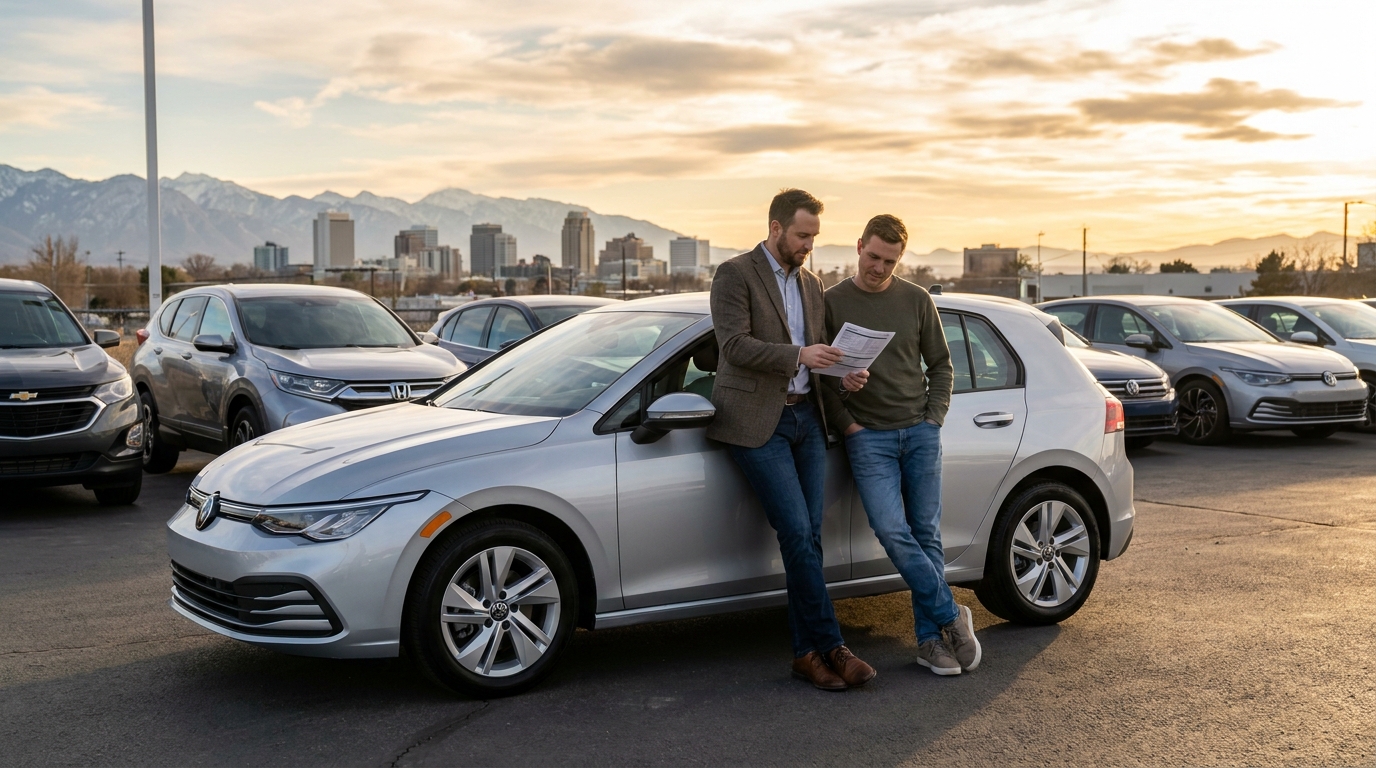
To find a reliable used car in Salt Lake City without guessing, buy from a franchise-backed used car dealership that provides a written vehicle history report, a pre-purchase inspection you can review, transparent out-the-door pricing, and a fair trade-in offer based on current KSL and Manheim data. Skip any lot that resists an independent inspection or hides fees until signing.
That's the framework. The rest of this guide shows you how to apply it along the Wasatch Front — what commuter mileage from West Jordan or Taylorsville actually means for a car's condition, how Utah winters and canyon driving age a vehicle, and what a legitimate Salt Lake City used car dealership will show you before you sign.
What makes a used car dealership in Salt Lake City actually trustworthy?
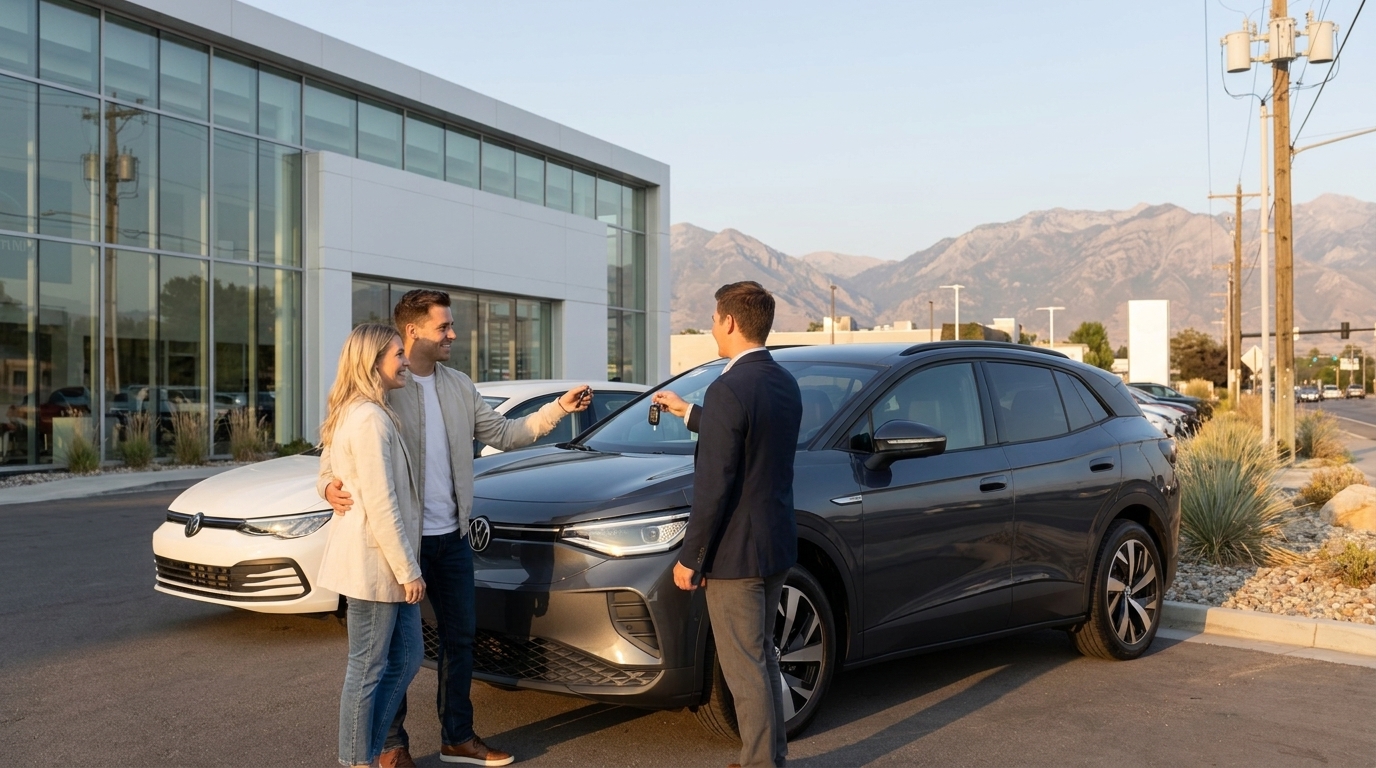
A trustworthy Salt Lake City used car dealership shows you the CarFax or AutoCheck report unprompted, prices vehicles at or below KSL Cars market value, welcomes a third-party inspection, and posts fees on the buyer's order without last-minute additions. Franchise dealers like Strong Volkswagen carry reconditioning standards and factory-trained techs that independent lots typically don't.
Here's what separates a reliable lot from a risky one:
- Written vehicle history — CarFax or AutoCheck handed over before you ask, not after.
- Reconditioning records — a checklist showing what was inspected, replaced, and serviced.
- Transparent pricing — the online price matches the buyer's order, minus tax and title.
- Trade-in math you can verify — an offer tied to KSL comps and Manheim auction data, not a mystery number.
- Willingness to let you leave — no pressure, no "today only" pricing, no four-square shuffle.
Strong Volkswagen operates on State Street in the central Salt Lake corridor and carries a 4.4-star rating across 7,618 Google reviews — a sample size large enough to signal consistency rather than a handful of curated wins. One recent reviewer described the experience as "straightforward pricing & fair trade in value up front," which is the exact behavior the checklist above is testing for.
How should Wasatch Front commute miles change how you evaluate a used car?
Highway miles from West Jordan, Taylorsville, Sandy, or Draper are gentler on a drivetrain than stop-and-go city miles — but Salt Lake Valley commuters also deal with I-15 construction backups, canyon grades, and PM2.5 inversion days that stress cooling systems and cabin air filters. A 90,000-mile Wasatch commuter car is often in better mechanical shape than a 60,000-mile car driven entirely in downtown traffic.
What to actually check on a Salt Lake area used car:
- Undercarriage corrosion — magnesium chloride brine used on I-15 and Bangerter Highway during winter accelerates rust on brake lines, subframes, and exhaust hangers. Look underneath, not just at the paint.
- Cooling system condition — canyon climbs up Parley's, Little Cottonwood, and Big Cottonwood punish radiators, water pumps, and transmission coolers. Ask when the coolant was last flushed.
- Cabin air filter and HVAC — winter inversions load filters faster than the manufacturer schedule assumes.
- Tire wear pattern — uneven wear from potholed surface streets in Rose Park, Glendale, or Sugar House can hint at alignment or suspension issues.
- AWD/4WD service history — differentials and transfer cases need fluid changes most owners skip; critical on any SUV that's seen ski traffic.
What do trade-in values look like in the Salt Lake City market in 2026?
Trade-in values in Salt Lake City run slightly above the national average for AWD SUVs, pickups, and ski-friendly vehicles, and slightly below average for convertibles and rear-wheel-drive sedans. Use KSL Cars and Kelley Blue Book side by side, then ask any used car dealership to show you the Manheim Market Report number they're pricing your trade against.
A quick reference for how the local market typically prices condition tiers:
| Trade-in condition | What it means | Typical SLC market position |
|---|---|---|
| Outstanding | No reconditioning needed, full service history | Top 5% — rare on trades |
| Clean | Minor wear, no accidents, current on maintenance | KBB "Very Good" range |
| Average | Normal wear, minor cosmetic issues, one owner | Where most SLC trades land |
| Rough | Mechanical or cosmetic work needed | Wholesale/auction pricing |
Two Salt Lake-specific factors to bake in: winter tire packages add real value to AWD vehicles here, and vehicles with documented service at a franchise dealership typically appraise 3-7% higher than those with only independent shop records, because the reconditioning cost drops for the buying dealer.
What should you inspect before signing at a Salt Lake City used car lot?
Before signing, verify the VIN on the dash matches the title and the CarFax, confirm the out-the-door price in writing (vehicle price + Utah 6.1% base sales tax + title/registration + any documentation fee), test-drive on both surface streets and I-15 or I-215, and either use the dealer's in-house inspection or take the car to an independent shop for a pre-purchase inspection.
Utah-specific paperwork to review at signing:
- Utah title — clean, not branded (salvage, rebuilt, flood). Utah brands stay with the title permanently.
- Safety and emissions — Salt Lake County requires emissions testing for most gas vehicles based on model year; confirm the current cycle is complete or included.
- Buyer's order line items — every fee itemized. Utah requires the documentation fee to be disclosed; if it appears at the last minute, push back.
- Warranty terms — factory powertrain remainder (transferable on most brands), certified pre-owned coverage if applicable, and any dealer-added service contract in writing.
Why does a franchise used car dealership matter more than the sticker price?
A franchise used car dealership has factory-trained technicians, OEM diagnostic tools, and access to open recall and warranty history that independent lots often don't. That translates into better reconditioning before the car hits the lot, real recall completion, and service records that follow the car — all of which show up later as fewer surprises and higher resale.
Strong Volkswagen's service department, for example, reviews the CarFax on every vehicle it works on to confirm maintenance is current, and reviewers repeatedly note that issues are explained with the part function and a cost estimate before any work begins. That same diagnostic depth is what a used car should get during reconditioning — not just an oil change and a car wash.
Frequently asked questions
How many used cars are sold in Salt Lake City each month?
Roughly 1,300 people search "used cars" in the Salt Lake City area each month, and industry data suggests actual monthly used vehicle sales across the Salt Lake metro run into the thousands when you include franchise dealers, independent lots, and private-party KSL Cars transactions. Franchise dealerships typically move the highest volume of late-model, low-mileage inventory.
Is it better to buy a used car from a dealership or a private seller in Utah?
A dealership offers financing, warranty options, reconditioning, title handling, and legal recourse under Utah dealer regulations. A private seller may offer a lower price but sells strictly as-is, with no inspection, no financing, and full responsibility for title transfer on you. For anything over 60,000 miles or under a factory warranty, the dealer path is usually the lower-risk buy.
What's the Utah sales tax on a used car?
Utah's base state sales tax is 4.85%, and Salt Lake County adds local option and transit taxes that bring the combined rate to roughly 7.75% in most of Salt Lake City. Utah does provide a trade-in tax credit — you pay sales tax only on the difference between the purchase price and your trade-in value, which can save hundreds to thousands on the transaction.
How many miles is too many for a used car in the Salt Lake area?
Mileage alone isn't the answer — a well-maintained 120,000-mile Wasatch highway commuter can be a better buy than a 70,000-mile car with skipped services. Focus on maintenance records, undercarriage condition after Utah winters, and whether the cooling system has been serviced. Modern powertrains routinely run 200,000+ miles with basic care.
Should I get a pre-purchase inspection on a used car from a franchise dealer?
Yes, even at a franchise dealership. A reputable used car dealership will let you take the vehicle to an independent shop for an inspection, or will walk you through their own multi-point reconditioning report. If any dealer refuses an independent inspection, treat that as your answer and shop elsewhere.
What areas around Salt Lake City does Strong Volkswagen serve?
Strong Volkswagen serves the Salt Lake City metro area, including buyers driving in from West Jordan, Taylorsville, Sandy, Draper, Murray, South Jordan, Cottonwood Heights, Bountiful, and the broader Wasatch Front. The dealership sits along the central Salt Lake corridor, making it accessible from I-15, I-215, and State Street.
Putting it together
Buying a used car in Salt Lake City doesn't have to be guesswork. Insist on the vehicle history, verify the trade-in math against KSL and Manheim, inspect for the specific wear patterns Wasatch driving produces, and read every line of the buyer's order before you sign. Franchise-backed used car dealerships give you the reconditioning depth and paperwork trail that make those checks meaningful.
Readers in Salt Lake City who want the process handled by a franchise dealership with a long local track record can reach Strong Volkswagen at https://www.strongvw.com to see current used inventory, request a trade-in appraisal, or schedule a pre-purchase walkthrough.